
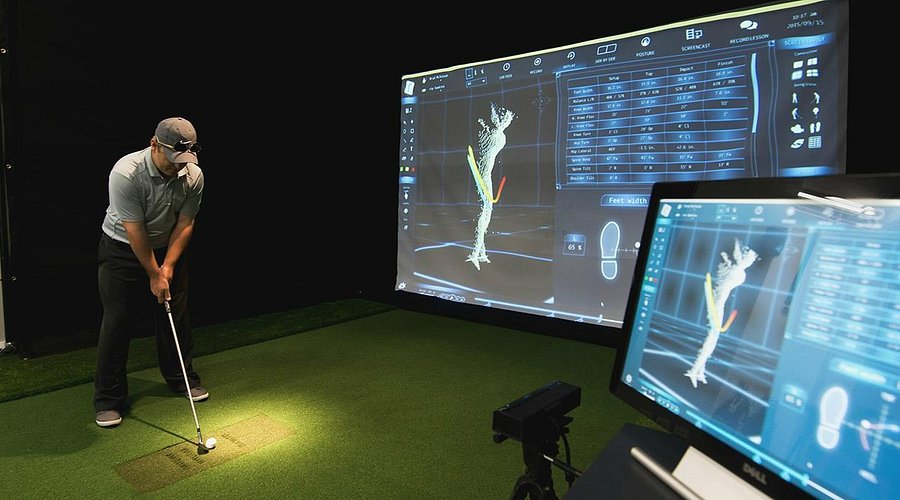
Golf at the highest level is no longer just about shaping draws and fades. Modern competitive play demands a deep understanding of shot geometry—the three-dimensional dispersion patterns that elite players intentionally engineer to gain statistical advantages across tournament setups. Rather than relying on generic “workability,” top players now manipulate shot cones, window heights, and lateral decay patterns to attack complex layouts with scientific precision.
This article explores the advanced, highly intentional process behind optimizing shot geometry. It goes far beyond basic ball-flight advice and dives into the nuanced systems pros and top amateurs use to gain scoring separation on demanding courses.
What Shot Geometry Really Means for Competitive Golf
The Concept of Intentional Shot Cones
Every shot, no matter how skilled the player, has a dispersion pattern. Instead of fighting dispersion, elite golfers shape it into a predictable “cone” that narrows or widens depending on the objective. This transforms randomness into a competitive tool.
Key characteristics of a well-managed shot cone include:
-
Consistent start line bandwidth that allows predictable curvature.
-
Height and apex uniformity to control carry distance under varying conditions.
-
Spin-axis stability for reliable shot shape under pressure.
-
Landing angle predictability which determines bounce, rollout, and hold.
When a player understands and intentionally shapes their cone, they position themselves with maximum forgiveness and minimum variance on every swing.
Why Modern Courses Demand Geometric Thinking
Tournament venues have evolved. Greens are firmer, fairways are contoured more aggressively, and hazards are positioned based on predictive player tendencies. Traditional workability is no longer enough.
Players now need:
-
Shallower landing angles on tight, wind-exposed fairways.
-
Higher apex windows for back-right or back-left pins.
-
Lateral containment on holes that narrow beyond 285 yards.
-
Spin loft precision to mitigate unpredictable turf interactions.
Shot geometry becomes the framework through which elite golfers navigate these demands.
The Science Behind Controlling Shot Windows
Vertical Windows: The Forgotten Dimension
Most advanced players think about horizontal shape, but controlling vertical launch windows creates far greater scoring advantages. Consistent height reduces variability in both carry and rollout.
How top golfers achieve height stability:
-
Micro-adjusting shaft lean to fine-tune dynamic loft without altering swing DNA.
-
Regulating ground pressure timing to stabilize angle of attack.
-
Using face-to-path ratio to maintain a consistent spin loft profile across clubs.
-
Training apex checkpoints at 40%, 55%, or 70% of target distance depending on club category.
A predictable vertical window leads to superior decision-making under crosswinds and at elevation.
Horizontal Windows: Managing Curvature the Smart Way
Advanced players avoid “over-shaping.” Instead, they produce curvature within a tight tolerance to maintain cone density.
Optimal curvature habits include:
-
Limiting curve to 3–7 yards with scoring irons for maximum precision.
-
Utilizing a predictable fall-off bias (typically a soft fade) for tee shots.
-
Controlling hand path depth to regulate face rotation and curve magnitude.
-
Influencing spin-axis tilt using grip pressure modulation rather than grip changes.
When horizontal and vertical windows align, the shot cone becomes exceptionally reliable.
Strategic Manipulation of Shot Cones by Club Category
Driver: Wide Base, Calculated Bias
Elite drivers are not “self-neutral.” They intentionally bias toward one side for maximal predictability.
Common competitive setups:
-
Soft fade cone for accuracy setups that narrows past 300 yards.
-
Push-draw cone for downwind carry when apex height becomes advantageous.
-
Neutral cone only when required to fit landing areas with variable width.
The objective is not maximum distance but maximum useful distance.
Fairway Woods and Hybrids: Mid-Apex Control
These clubs must produce consistent apex heights because they are often used into long par 5s and tight par 4s.
Players focus on:
-
Spin rate stability within a 300 rpm band.
-
Maintaining a narrower dispersion cone due to smaller target zones.
-
Landing angle predictability to hold firm greens from long range.
Small changes in apex height have major effects at these distances.
Irons: Compression-Based Geometry
With irons, pros aim to minimize variability in both launch and curve, creating extremely tight cones.
Important elements:
-
Replicating strike location within a few millimeters.
-
Using subtle face manipulation to influence curvature without over-shaping.
-
Maintaining a repeatable contact depth to achieve consistent spin loft.
The tighter the iron cone, the more aggressively players can fire at tucked pins.
Wedges: Micro-Cone Precision
At scoring distances, shot cones become ultra-narrow, and height uniformity is paramount.
Techniques include:
-
Controlling dynamic loft with chest rotation speed.
-
Matching bounce profile to turf density for predictable strike behavior.
-
Managing launch windows at 28°, 32°, and 36° depending on shot type.
This maximizes proximity and reduces three-putts.
Environmental Factors That Shape Shot Geometry
Wind Interaction
Wind affects apex more than curvature. Elite players manage wind by:
-
Lowering spin loft rather than “swinging softer.”
-
Selecting a window height that matches wind layers.
-
Adjusting curve bias to harmonize with crosswind vectors.
Controlling the cone under wind is the difference between surviving and scoring.
Turf Conditions
Firm turf amplifies dispersion because landing angles become critical.
Players adjust by:
-
Using tighter start-line patterns to avoid exaggerated bounce.
-
Shifting landing targets earlier to account for rollout.
-
Adapting shot windows to reduce incoming speed.
Elevation
Elevation alters ball flight geometry in nonlinear ways.
Elite players compensate through:
-
Apex recalibration to match thinner air.
-
Adjusting distance expectations based on spin retention.
-
Modifying start-line width when crosswinds strengthen at altitude.
How Competitive Golfers Train Shot Geometry
Variable-Window Drills
Players practice hitting three height windows with the same club, reinforcing dynamic loft control.
Cone-Narrowing Sessions
This involves hitting repeated shots into progressively shrinking dispersion zones to improve start-line consistency.
Spin-Loft Patterning
Using launch monitors, players learn how slight changes in face angle, attack angle, and loft produce predictable geometric outcomes.
Randomized Target Practice
Rather than block practice, elite golfers randomize:
-
Windows
-
Curvature
-
Start lines
-
Apex points
This trains adaptability, the hallmark of shot-geometry mastery.
Why Shot Geometry Provides a Competitive Edge
Scoring Compression
Tighter cones equal more greens hit, fewer short-sided misses, and lower variance over four rounds.
Predictability Under Pressure
Players who understand shot geometry avoid emotionally driven adjustments because they rely on stable, measurable patterns.
Strategic Dominance
With geometric mastery, golfers build course strategies around probability, not hope.
FAQs
1. How does shot geometry differ from traditional shot shaping?
Shot geometry focuses on controlling dispersion across three dimensions, not just shaping left or right.
2. Why do pros prefer a fade-biased driver setup?
It narrows the shot cone and provides more predictable face-to-path control under pressure.
3. How does apex height influence carry distance?
Apex height affects lift, spin decay, and how the ball interacts with wind layers, making it crucial for distance consistency.
4. Can amateur players benefit from shot-cone training?
Yes. Even modest improvements in dispersion dramatically improve scoring and consistency.
5. Why is dynamic loft more important than static loft in geometry control?
Dynamic loft determines the actual launch and spin conditions at impact, shaping the entire flight.
6. How do advanced players adjust their cones for firm greens?
They manipulate landing angles, reduce incoming speed, and tighten start-line dispersion.
7. Does changing the ball model affect shot geometry?
Absolutely. Different balls have distinct spin profiles, affecting both vertical and horizontal windows.


