
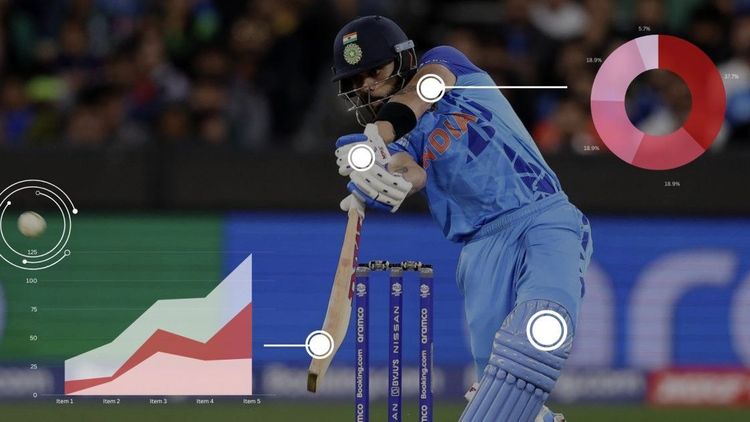
T20 cricket is often perceived as a high-octane contest dominated by big hitters and aggressive bowling spells, yet the real battle increasingly unfolds in the analytical domain. The modern game has shifted from instinct-driven tactics to deeply computational decision-making, where every delivery is treated as a micro-event that can be optimized. Among the most influential developments is the rise of matchup intelligence—a granular, data-powered approach to evaluating how specific players fare against each other in precise game conditions. This article dives deep into how matchup science is reshaping the tactical core of elite T20 cricket.
The Rise of Hyper-Specific Matchup Profiling
More Than Just Strengths and Weaknesses
Traditional coaching often relied on broad observations about a player’s proficiency. Modern analysts examine extremely narrow windows of performance such as a batter’s strike rate in the first six balls against left-arm pacers bowling around the wicket, or a spinner’s economy when he bowls a flatter trajectory from over the wicket in the middle overs. These micro-patterns help teams create hyper-detailed maps of player tendencies.
The Shift to Contextual Matchups
A batter may dominate a particular bowler overall, yet struggle in specific scenarios like chasing high totals, batting during twilight conditions, or facing a particular length. Contemporary matchup evaluations consider:
-
Ground dimensions
-
Pitch aging patterns
-
Wind direction effects
-
Pressure variables (such as required run rate above 10)
-
Fielding configurations
This allows teams to avoid simplistic assumptions and tailor strategies with surgical precision.
Matchup-Driven Team Selection: Building Squads for Situational Warfare
Constructing Modular Lineups
Franchises increasingly build squads with modular flexibility, meaning they can rotate specialists depending on anticipated matchups. For example, a wrist-spinner with a high success rate against right-handers might be strategically omitted on a pitch where the opposition’s left-handed heavy top order diminishes his utility.
Using Secondary Skills as Tie-Breakers
When two players are similar in primary skill, analysts rely on matchup-based secondary benefits—such as a bowler who historically removes a specific opposition opener, or a batter averaged to survive the first 10 balls against a matchup-heavy bowler. These minute advantages often influence crucial selection calls in high-stakes games.
Powerplay Matchup Dynamics in the Age of Aggression
Targeting New-Ball Specialists
Teams now identify bowlers who excel at exploiting early swing or seam variation against certain batters. A pacer may not be the fastest but could own a narrow-angle release that troubles a particular opener. This understanding shapes decisions like:
-
Deploying a swing bowler only for the first eight balls
-
Adjusting slip positions based on proven edge-induction patterns
-
Forcing certain batters to strike earlier than comfortable
Powerplay Batting Plans Aligned With Matchup Flows
Some batters are now instructed to take calculated risks only against designated bowlers whose matchup data indicates vulnerability. This reduces aimless aggression and funnels powerplay hitting into high-probability scoring windows.
Middle-Overs Chess: The Domain of Spin Matchups
Precision Spin Utilization
Spinners are no longer used generically. Teams apply them:
-
To trap batters who struggle sweeping
-
To force matchups where a batter’s scoring zone is minimized
-
To break partnerships where contrasting strike-rate patterns are evident
Data also reveals how spinners should vary their pace, angle of release, and degree of overspin to exploit specific matchup tendencies.
Left-Right Pairing Disruptions
Teams frequently manipulate batting combinations to disrupt unfavorable spin matchups. Left-right rotations can force bowlers to alter lengths, lines, and trajectories, diluting their natural patterns. Matchup-aware captains choreograph these rotations with remarkable detail.
Death Overs: Analytical Precision at Its Peak
Tailoring Yorker and Slower-Ball Frequencies
The death overs tilt heavily toward matchup-controlled bowling plans. Bowlers are instructed on exactly when to use:
-
Full-wide yorkers
-
Off-cutters into the pitch
-
Back-of-the-hand slower balls
-
Short balls targeting chest-height zones
These are planned based on a batter’s documented performance against specific pace variations within a defined late-innings pressure scenario.
Protecting the Most Vulnerable Zones
Teams map the most frequently exploited hitting zones of each batter. Analytics engines simulate trajectories to minimize the probability of boundary leakage. This leads to creative field placements and unconventional line-length mixtures, all rooted in matchup probability models.
Matchups and Franchise Economics: How Data Shapes Player Value
The Rise of Specialist Value Brackets
Players once undervalued for inconsistent broader stats sometimes command premium prices due to exceptional matchup potency. For example, a bowler who dismisses a league’s top two openers more frequently than anyone else becomes strategically priceless even if his overall economy is mediocre.
Contextual Metrics Influence Auctions
Franchises analyze how a player’s matchup strengths align with home conditions and typical opposition lineups. This context-adjusted evaluation often determines bidding strategies and salary caps. The economics of T20 success today is inseparable from the intelligence of matchup profiling.
Tech-Enhanced Matchup Tools: AI, Wearables, and Biomechanics
AI-Driven Simulation Models
AI platforms simulate thousands of hypothetical match scenarios using real-time data points like humidity, pitch hardness, ball age, and player fatigue indicators. This allows teams to forecast matchup outcomes with high confidence.
Wearable Tech and Biomechanical Mapping
Wearable sensors track micro-movements and muscle load patterns, helping analysts understand when a bowler’s accuracy drops or a batter’s bat speed dips. These metrics feed into matchup systems that recommend optimal bowling spells or batting entry points.
Cultural Shift: How Players Adapt to Analytical Matchups
Player-Specific Tactical Plans
Players now receive detailed dossiers containing:
-
Expected matchup loops
-
High-risk delivery types
-
Anticipated variation patterns
-
Suggested counter-strategies
This enables them to prepare responses in advance rather than improvising under pressure.
Training With Matchup-Aware Drills
Practice sessions mimic expected match scenarios—bowlers replicate angles of their matchup opponents, and batters face simulated sequences against their predicted threats. This method reduces uncertainty on game day and elevates execution quality.
The Future: Predictive Matchups and Real-Time Adaptation
On-Field Decision Support Systems
Teams are experimenting with near-real-time data feeds to help captains adjust matchups mid-over. As rules evolve and technology integrates further, in-game strategy boards could quietly become the most influential extension of team staff.
Squad Construction Based on Predictive Matchup Forecasts
Some franchises are already using predictive models to anticipate how upcoming young players might evolve against certain matchup categories. This foresight guides long-term recruitment and player development.
FAQ
What makes matchup analysis more valuable in T20 cricket than other formats?
T20 cricket’s limited overs amplify the impact of each micro-decision. A single favorable matchup can dictate the outcome of an entire phase, making granular analysis disproportionately valuable.
How do teams gather player-specific matchup information?
Teams combine ball-tracking databases, detailed video analytics, biomechanical inputs, and proprietary AI models to assemble extremely accurate player profiles.
Are captains fully dependent on data during matches?
Captains receive data-driven recommendations, but situational awareness, intuition, and real-time player behavior still influence final decisions.
Do players prepare differently when aware of unfavorable matchups?
Yes. Batters practice shot modifications, stance adjustments, and scoring alternatives, while bowlers develop counters against batters who historically dominate them.
How do teams balance matchup data with player confidence?
Coaches often blend data insights with psychological factors, ensuring players don’t feel restricted or overwhelmed by analytical inputs.
Can matchup data predict outcomes with high accuracy?
While no model guarantees certainty, advanced analytics significantly improve the accuracy of predicting how specific micro-scenarios might unfold.
Will traditional coaching lose importance due to analytics?
Not at all. The modern game blends intuitive coaching with analytical precision, making both elements indispensable for success.


